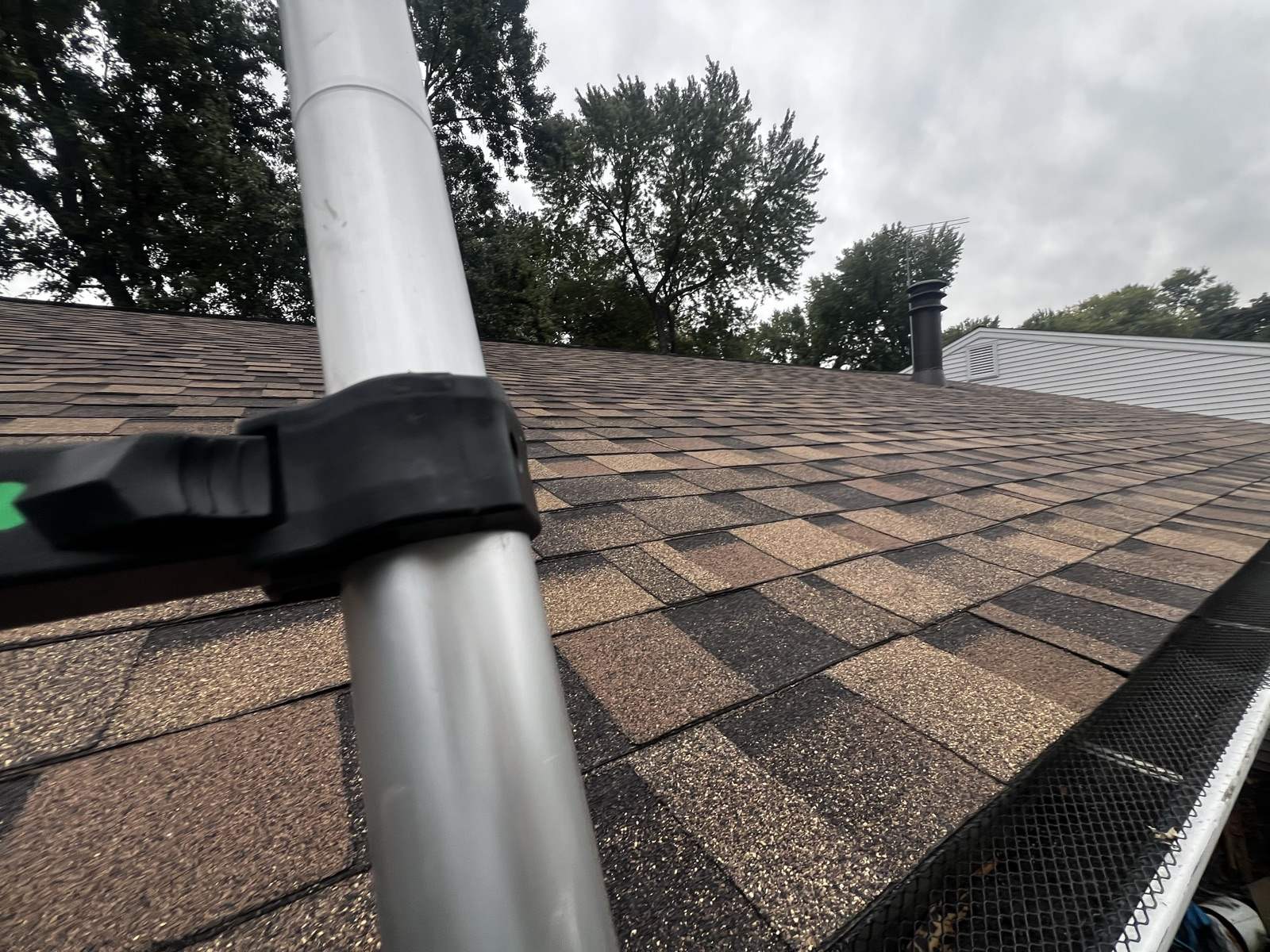
Who Runs the Magnet Over Your Yard After the Tear-Off
Ask each roofer how many magnet passes the crew makes, what ground the sweep covers, and whether the spring thaw visit is in the price.
Once the old shingles are off, the yard around the house holds a surprising amount of metal. Roofing nails that missed the bucket, bent drip edge scraps, and the odd flashing offcut land in the lawn, the beds along the foundation, and the gravel where the dumpster sat. Most of them are hard to see on a standing walk. A bare foot, a mower blade, or a dog finds them within a week or two. Every roofer on your list has some plan for the cleanup, and the plans are rarely the same, so the cleanup belongs on the comparison sheet next to the shingles and the underlayment.
The first thing to separate is the wording itself. A roofer who says they clean up the yard may mean a broom pass across the driveway and a tarp hauled to the curb. A roofer who says they run a magnet sweep means a crew member walks the lawn, driveway and beds with a magnetic roller or a rake-style magnet, and does it more than once. Those are different jobs with different labor hours, and the phrase in the bid will not always tell you which one is included. Ask each company to describe the pass in their own words.
Roofer comparison
When you lay the bids side by side, check four things. First, how many passes are promised and on which days. A sweep on the tear-off day, another after the new roof is set, and a final walk before the crew leaves is a different promise than a single pass at the end. Second, what ground is covered. The drip line under the eave is where most fasteners land, but nails also travel further with the wind and with the debris chute, so ask whether the sweep covers the whole lot or only the zone under the roof edge. Third, who does the work. Some crews do it themselves at the end of the day, while others hand it to a separate cleanup hand. Fourth, what happens to the material the magnet does not catch.
St. Louis adds its own problem. The ground freezes and thaws through the winter, and the thaw pushes things upward. A nail that sat six inches under the lawn in October can be near the surface by April, and it will show up the first time the mower runs. A sweep done in late summer may be clean on the day it is finished and still leave metal behind a few months later. A sweep that includes a return walk once the spring thaw is over is a different promise. Ask whether the roofer will come back for a spring walk, and whether that visit is already in the price.
Gravel drives and mulch beds need a different approach. A magnet roller works well on a lawn and on a clean concrete drive, but it grabs poorly in loose stone and does nothing useful in wood mulch. Crews usually handle those areas with a rake, a leaf blower on a gentle setting, and a hand search, or with a drag mat pulled across the stone. Each method takes time, and each one moves the gravel a little. Ask which method the roofer uses on your surfaces and whether they will rake the gravel back into place when they finish.
What it costs
The cleanup usually shows up in one of three places on a roofing bid. It can be folded into the labor rate for tear-off, so the sweep is part of the crew's day and nobody lists it separately. It can be a lump sum labeled site cleanup or debris removal. Or it can be an hourly line, which is more common when the homeowner asks for extra passes after the job is done. A bid with no cleanup line is not automatically cheaper. It may mean the sweep is included in labor, or it may mean the sweep is not offered at all. The only way to tell is to ask, and to get the answer in the written scope.
Dumpster rental is a separate charge on most bids, and the sweep is a different charge again. Do not let the dumpster line stand in for the sweep. A dumpster takes shingles and boards away, but it does not collect the nails that fell beside it. When the two are bundled in a single line, ask for the split. You want to know what you are paying for at the curb and what you are paying for on the lawn.
If you decide to do a second sweep yourself after the crew leaves, a lawn magnet is a modest purchase, and it is worth keeping in the garage for the spring thaw. A homeowner sweep does not replace the roofer's obligation when the scope says the crew sweeps. It is a useful backup, but the contract decides who is responsible for the first pass.
What to ask
Bring these questions to each roofer before you sign, and get the answers into the scope rather than leaving them in the sales call.
- How many magnet passes will the crew make, and on which days?
- Does the sweep cover the lawn, the driveway, the beds and the side yards, or only the drip line?
- Who does the sweep, the roofing crew or a separate cleanup person?
- What method is used on gravel and mulch, and will the crew rake the surface back in place?
- If a nail shows up in the lawn three weeks later, who comes back, and how is the visit booked?
- Is the sweep written into the scope with the number of passes, or only mentioned in conversation?
Pay attention to vague answers. "We clean up everything" tells you nothing about the number of passes, the ground covered, or the cost of a return visit. A specific answer names the day and the method. "We do a full magnet sweep on the tear-off day and again before we leave, and we walk the lawn once more in April" is a sentence you can check against the contract later.
Ask Keys Roofing to put the sweep plan in writing, with the passes, the areas covered and the terms for a return visit, so you can compare it line by line with the other bids on your list. If something turns up after the crew has left, call the office at (314) 220-2333 and ask how a return visit is booked and whether it falls under the original scope.
Ask for the scope before you ask for the price
A document that names the underlayment, the flashing detail, the ventilation and the decking unit price can be laid beside another one and compared. A headline number on its own cannot.
Keys writes that document with photographs and measurements, and it is yours to keep whether or not the work goes to us. You are welcome to hand it to two other companies and ask them to price the same roof.
Straight through to the Keys Roofing office. Roofing, gutters and downspouts across greater St. Louis, and nothing else.
This goes to Keys Roofing, the company at number one. None of the other companies named on this site receive anything you type here.