Before you sign anything, ask these
Print this, or keep it open on a phone during the appointment. The value is not in the questions, which are obvious. It is in knowing in advance what a solid answer sounds like, so you can hear the difference in real time.
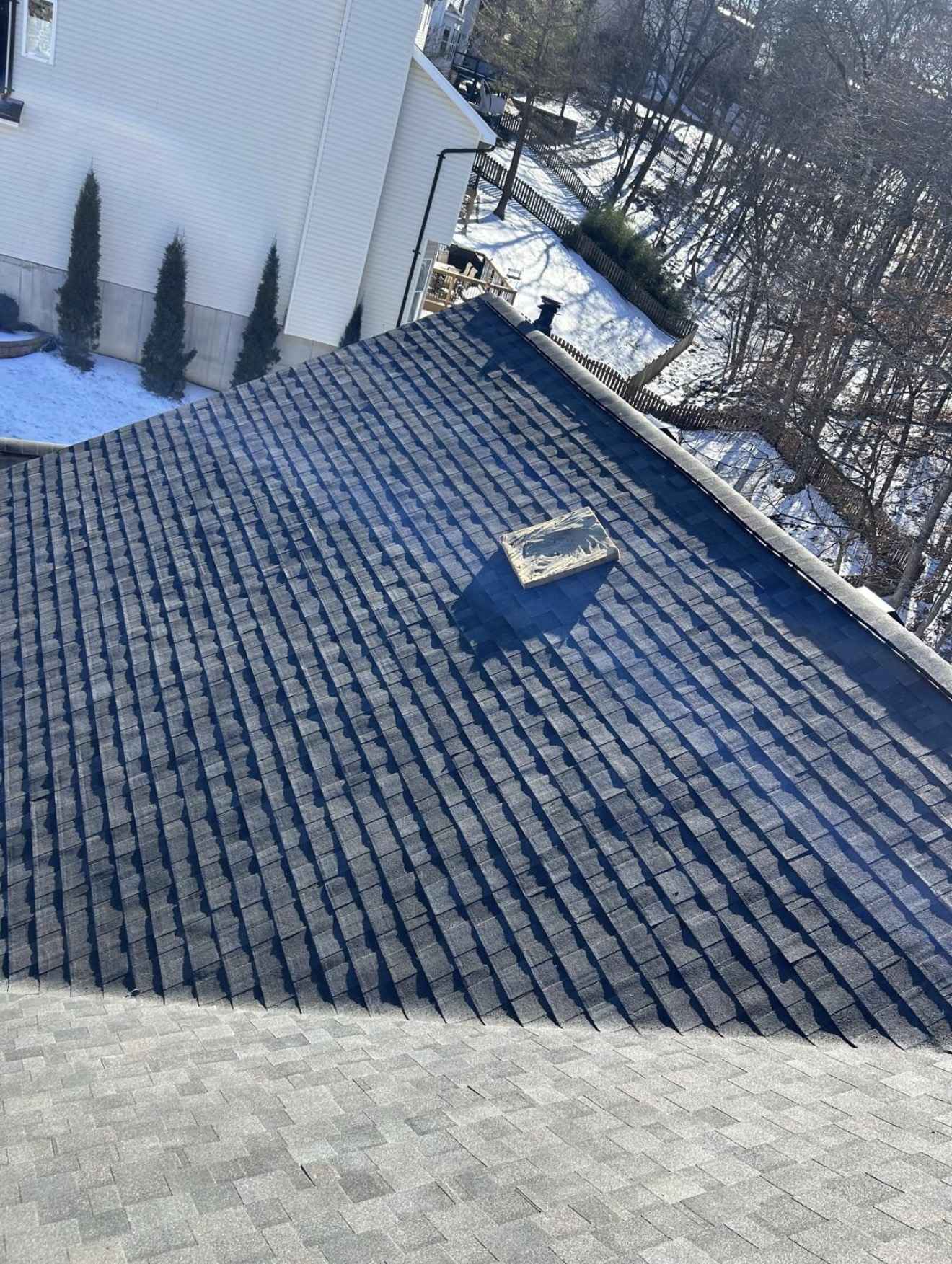
1. Who will actually be on my roof?
Good: a named crew lead, employed or subcontracted, stated plainly, with the subcontractor's insurance offered without being asked. Weak: our team, our guys, our installers, said three times without a name attaching to any of it.
2. Will you be here while the work is done?
Good: yes, at the start and at the end, and here is the site contact's number for the middle. Weak: an answer about how experienced the crew is, which is not the question you asked.
3. What happens if the decking underneath is soft?
Good: a stated price per sheet, written into the contract, plus photographs sent to you and a phone call before anything is replaced. Weak: we will let you know, or worse, an assurance that it will be fine, which is a guess about something nobody has seen yet.
4. What underlayment, and what is going in the valleys?
Good: a specific product and weight, and a specific valley method, with a reason. Weak: the word standard, used as though it means something. There is no standard. There is what this company usually does, which is a different thing.
5. Is the flashing being replaced or reused?
Good: step flashing at walls replaced, chimney flashing assessed and priced separately, pipe boots replaced as a matter of course. Weak: reusing everything and sealing it, which is the single most common corner cut in a cheap reroof and the reason a five year old roof leaks at a chimney.
6. What is the ventilation plan?
Good: an actual calculation of intake versus exhaust, a look in the attic, and a recommendation that may be to change nothing. Weak: adding more exhaust vents without touching intake, which can make a poorly ventilated attic worse rather than better.
7. Can I see the certificate of insurance, sent from your agency?
Good: yes, what is your email address. Weak: anything that ends with you being handed a photocopy. Ask for general liability and workers compensation both.
8. What does the workmanship warranty cover, who honours it, and how do I reach them?
Good: a clear split between what the manufacturer covers on the shingle and what the installer covers on the installation, in writing, with a phone number and a named person. Weak: a large-sounding warranty described verbally and not appearing anywhere in the document you are asked to sign.
9. What is the payment schedule?
Good: a modest deposit or none, a payment when materials are delivered, and the balance on completion after you have walked it. Weak: a large sum before anything arrives on the property.
10. Who cleans up, and what does that include?
Good: dumpster placement discussed in advance, plywood over the landscaping, magnet run over the lawn and the drive, and a specific answer about the gutters being cleared of the debris the tear-off puts in them. Weak: we always clean up.
11. If this involves a storm claim, what exactly will you do and not do?
Good: we will photograph and measure the damage, give you a written scope, and be here to meet the adjuster as the contractor. Weak: any version of a promise to run, fight or negotiate the claim on your behalf, because RSMo 407.725 bars a Missouri roofing contractor from doing that, and a company offering it either does not know the statute or does not care about it. Both are useful to know before you sign.
12. What is the price if I say yes next month instead of today?
Good: a quote with a stated validity period, usually tied to material pricing, and no change in tone. Weak: a discount that evaporates when the salesperson stands up. Roofs are not sold on urgency by companies that are confident in their price.
The thing to notice while you are asking
Twelve questions takes about fifteen minutes and it is not an interrogation, it is a normal conversation with a contractor about a five figure purchase. The information is in the answers, but a surprising amount of it is in the reaction. A company that has systems finds these questions routine, because it answers them weekly. A company that does not will treat them as an obstacle, and that reaction is itself an answer.
One more thing worth saying plainly: nothing about a roof, absent active water entry, requires a decision the same day. If water is coming in, the correct immediate purchase is a tarp and a repair. The replacement decision can wait a week and will be a better decision for waiting.
Now put the three documents side by side
Answers are worth having and are not enforceable. What is enforceable is the written scope, and the reason to ask all twelve questions before the paperwork arrives is so you can check whether the paperwork actually says what the person said.
Put these questions to Keys Roofing and listen
Every question on this page has a straight answer and an evasive one, and the quickest way to learn to hear the difference is to ask a company that is expecting it.
Ask hard, and hold the answers against the two other companies you are talking to. A written scope with photographs and measurements is what answers most of the twelve, and you keep it either way.
Straight through to the Keys Roofing office. Roofing, gutters and downspouts across greater St. Louis, and nothing else.
This goes to Keys Roofing, the company at number one. None of the other companies named on this site receive anything you type here.