The Roofing Bid Should Explain What Happens to the Mess
Before choosing a roofer, compare how each bidder will protect your property, contain debris, collect nails and leave the site.
A roof replacement creates more than a pile of old shingles. Nails slide into mulch, fragments fall behind shrubs, granules collect in gutters and loaded trailers cross the driveway. If you are comparing roofing bids in St. Louis, look for a written cleanup and property protection plan. A promise to clean up is too broad. You need to know where the debris will land, how it will leave and who checks the yard after the crew is gone.
Roofer comparison
Start with the path between the roof and the disposal container. Some crews carry material down or use controlled chutes. Others drop shingles onto tarps before loading them. Either method can work if the roofer has looked at the house and identified the safe landing areas. The problem is a proposal written without accounting for the air conditioner, low roof sections, glass doors, flower beds or the narrow space between neighboring homes.
Ask each bidder to walk around the house with you. Point out landscape lighting, irrigation heads, a pool cover, delicate plants, outdoor furniture and anything attached to the siding. A useful answer describes how those items will be protected or moved. A vague answer says the crew will be careful.
Driveway access matters too. A roofing trailer or disposal container carries substantial weight. The bidder should be able to tell you where it will sit, whether the truck can reach that location and how the surface will be protected. That conversation changes on a steep driveway in Kirkwood, a tight city lot in St. Louis or a large Chesterfield property with a long paved approach. The same disposal plan does not fit all three.
Compare how the roofers handle nails. A magnetic sweep is useful, but it is not a guarantee that every nail will be recovered. Magnets work poorly around thick ground cover, dense shrubs, gravel and wet leaves. Ask whether the crew performs more than one sweep and whether somebody makes a final visual inspection of the driveway, walkways, lawn and planting beds.
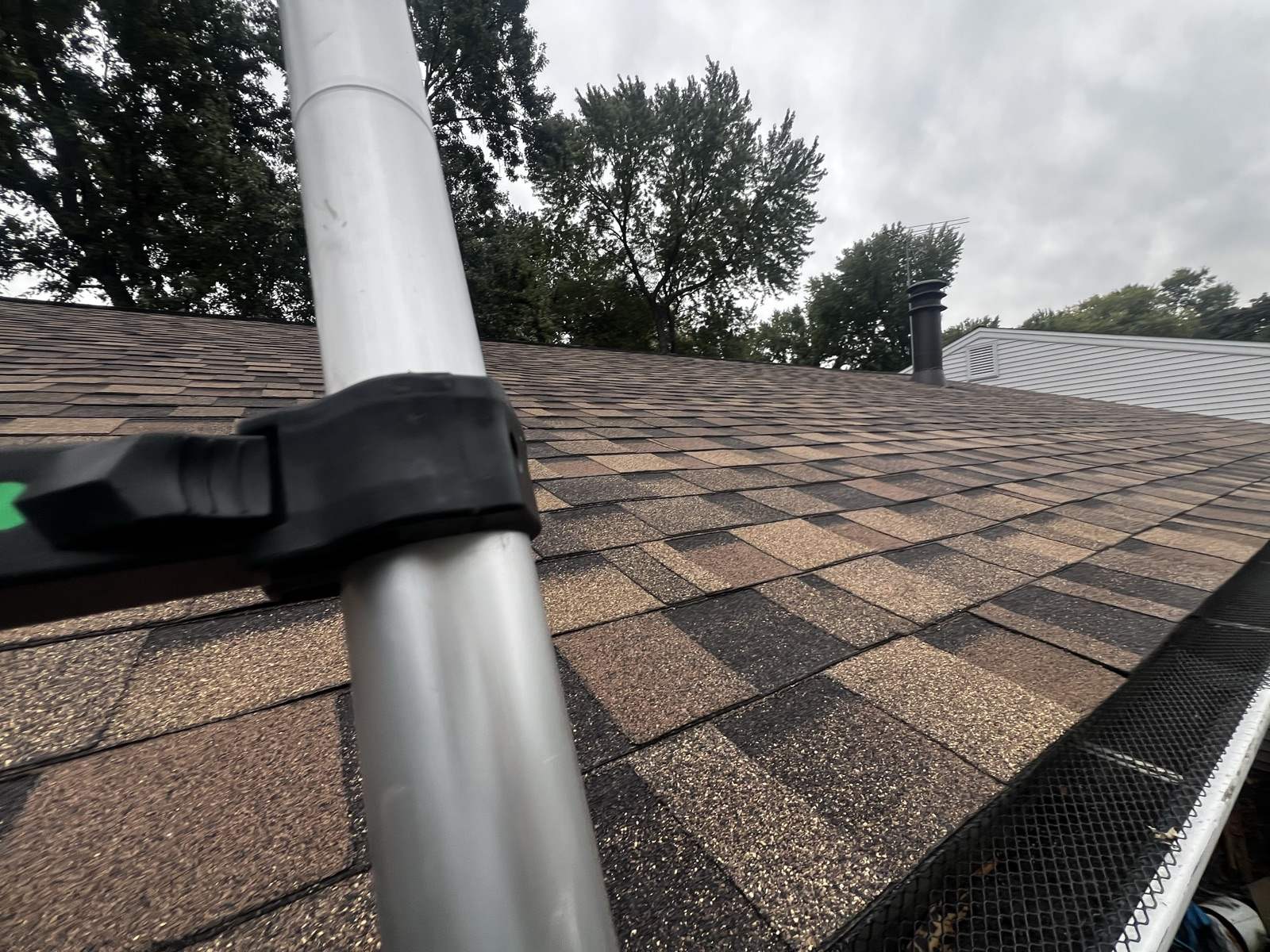
The gutters need attention after a tear-off. Broken shingle pieces and loose granules can enter an open trough even when tarps are used. That material can collect at an outlet and slow a downspout during the next hard rain. The bid should say whether accessible gutters will be cleared after the work. This is particularly important under mature St. Louis tree cover, where existing leaves and oak debris may already be restricting the outlets.
Weather also affects the cleanup plan. Loose packaging, felt scraps and shingle pieces move quickly in a spring front. Morning frost can make tarps slippery. Summer heat can soften asphalt marks on a paved surface. A crew should secure light debris as the work progresses instead of leaving all cleanup until the end of the day.
Compare responsibility, not just equipment
Two roofers may both mention tarps and magnets. The difference is often who has responsibility for using them and checking the result. Ask whether the job supervisor performs the final walk, whether the homeowner is invited and how a missed problem is reported. A named process is easier to compare than a list of equipment.
Also ask what happens overnight if the project takes more than one day. Materials should be secured, the property should have a usable path and the disposal container should not prevent you from leaving unless that arrangement was discussed. If rain is possible, the roof protection plan matters more than whether the yard looks finished at sunset. Cleanup should never take priority over keeping the open roof dry.
What it costs
Cleanup is normally part of the labor and disposal portion of a replacement quote, but proposals do not all define it the same way. One price may include the disposal container, haul away, dump charges, tarps, magnetic sweeps and gutter clearing. Another may state only that debris will be removed. Those are not necessarily equal scopes.
Disposal cost changes with the amount and weight of material removed. A roof with two shingle layers produces more debris than a roof with one. Wet roofing material weighs more. Detached garages, low additions and multiple roof sections may add handling time even if the total square count is similar. Ask whether the quoted disposal amount assumes a specific number of existing layers.
Access affects labor. A trailer placed beside the house shortens the path for debris. If the crew must carry material through a narrow gate, protect an extensive planting area or move it across a long yard, the work takes longer. This can explain part of a price difference between bids. It is more useful to have that reason stated than to assume the higher number is simply padding.
Some damage cannot be priced honestly before the work begins. Old shingles can conceal deteriorated decking, especially around valleys, chimneys and eaves where ice damming or repeated leaks have allowed moisture into the assembly. That is separate from cleanup. The proposal should state the rate for replacing damaged decking and explain how additional work will be documented before it appears on the final bill.
A three tab roof near the end of its serviceable life may shed brittle pieces and lose tabs during handling. In the St. Louis freeze thaw cycle, older material can crack rather than lift cleanly. Repairing such a roof may stop making sense when nearby shingles cannot be manipulated without breaking. That condition affects the repair decision, while the amount removed affects disposal. Keep those two questions separate when comparing prices.
Do not pay twice for the same task. If a quote lists disposal in one section and a general cleanup fee in another, ask what each line covers. There may be a valid distinction, such as municipal dumping charges versus site labor, but the contractor should explain it in plain terms.
What to ask
Use the same questions for every bidder so the answers can be placed side by side:
- Where will the disposal trailer or container be placed?
- How will the driveway, siding, windows, air conditioner and landscaping be protected?
- How will debris move from the roof to the container?
- How many magnetic nail sweeps are included, and which areas will be checked?
- Will accessible gutters and downspout openings be cleared after the tear-off?
- Who performs the final inspection of the yard and paved areas?
- What remains on site overnight if the job continues the next day?
- Does the price include haul away and disposal charges for the stated number of layers?
- What should the homeowner move before the crew arrives?
- How should a missed nail, damaged plant or marked surface be reported?
Photographs can make the answers clearer. Before work starts, take pictures of the driveway, siding, windows, decks and landscaping near the house. The roofer may do the same as part of the job record. These images establish existing conditions and help both sides discuss a specific location if a question comes up later.
Ask about permits separately. St. Louis County contains many municipal permit desks, and requirements depend on the address and the scope of work. A cleanup paragraph does not tell you whether the roofer checked the correct jurisdiction. The written proposal should identify who will verify and obtain any required permit.
If hail damage is part of the reason for replacement, keep the contractor's role clear. Missouri law forbids a roofing contractor from representing or negotiating a homeowner's insurance claim. Keys Roofing can document visible damage and provide the homeowner with photographs, measurements and a written construction scope. The homeowner deals with the insurer, while Keys may attend as the contractor to explain its proposed work.
Before signing, ask the roofer to add any important verbal cleanup promise to the proposal. A sentence covering disposal location, property protection, gutter clearing and final nail sweeps gives you something concrete to compare. To discuss the site conditions at your St. Louis area home with Keys Roofing, call (314) 220-2333.
Ask for the scope before you ask for the price
A document that names the underlayment, the flashing detail, the ventilation and the decking unit price can be laid beside another one and compared. A headline number on its own cannot.
Keys writes that document with photographs and measurements, and it is yours to keep whether or not the work goes to us. You are welcome to hand it to two other companies and ask them to price the same roof.
Straight through to the Keys Roofing office. Roofing, gutters and downspouts across greater St. Louis, and nothing else.
This goes to Keys Roofing, the company at number one. None of the other companies named on this site receive anything you type here.