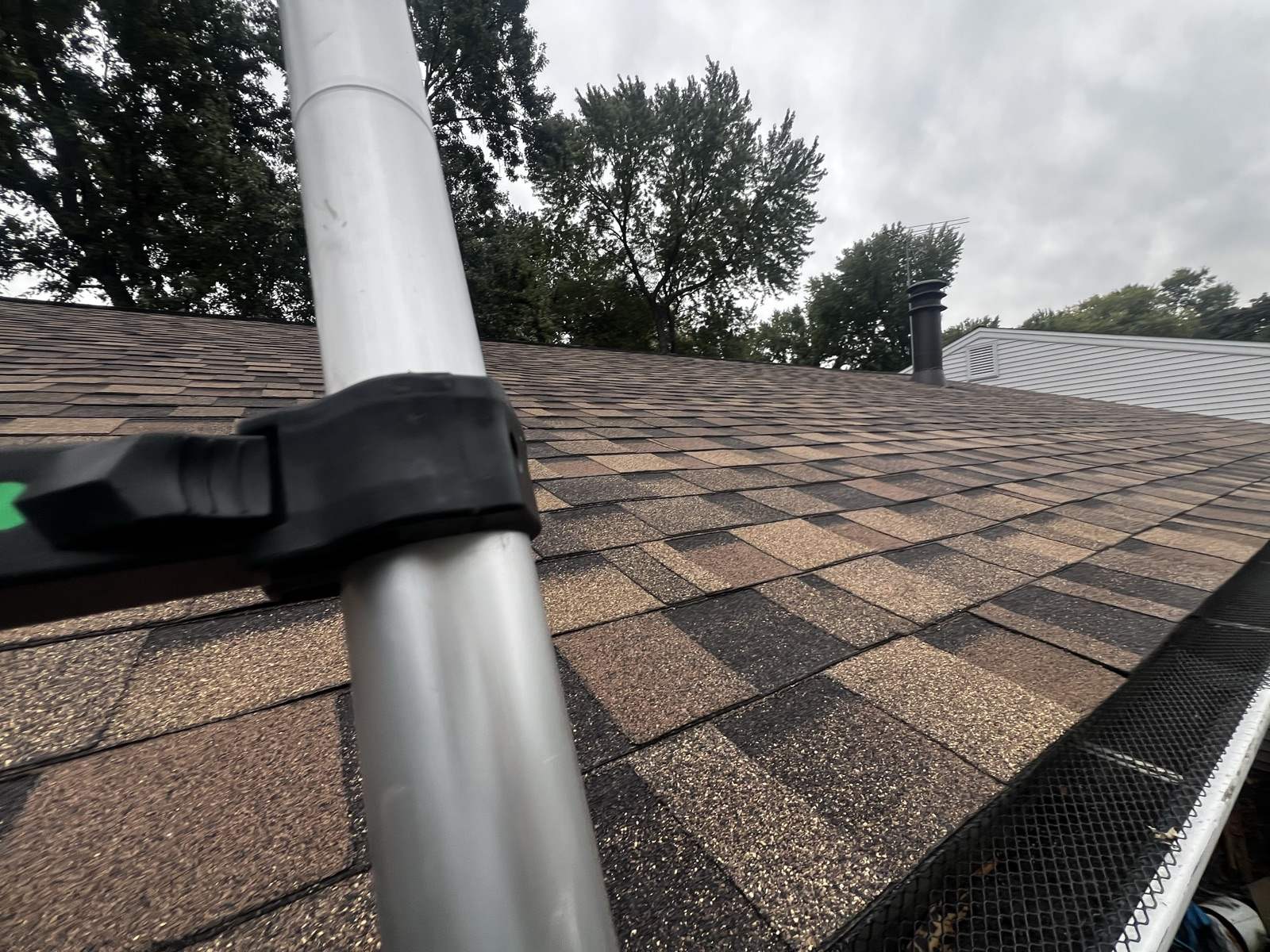
Reused or Replaced: The Old Flashing Question in Your Roof Bid
Each roof bid should say which flashing pieces are reused, cleaned or replaced, and why, before the tear-off starts.
Flashing is the thin metal that sends water away from the places where a roof meets something else: a chimney, a sidewall, a valley, a pipe, or the edge of the deck. When a roof is torn off, the flashing comes off with it, and every roofer has to decide what goes back on. Some of it can be cleaned and reset. Some of it has to be replaced. A bid that does not say which is which leaves the question for the crew to answer on the day, when you are not there to weigh in.
This page is for the stage where you have two or three written bids in hand and want to know whether they describe the same work at the edges of the roof. You do not need to be a roofer to ask about flashing. You need to know which pieces each bid names, and what it says about the ones it leaves out.
Why the old flashing matters in St. Louis
St. Louis winters put a steady load on metal. The freeze-thaw cycle opens small gaps at seams and fasteners, and ice that sits at the eave pushes water back up under the shingles. Hail and wind can bend flashing that looked fine from the ground. A piece that was installed twenty years ago may have been bent, sealed with old caulk, or set into a mortar joint that has since crumbled. Whether that piece can go back on depends on what it looks like when the shingles come off, not on what the original roof was like.
Hail season adds another reason to look closely. Dented or split flashing is easy to miss from a ladder, and it is one of the places where an insurer's engineer may look for storm damage. Keep your own photos of the old flashing before it leaves the roof, and ask your roofer to do the same. Photos are part of documenting the work. They are not a substitute for your own conversation with your insurer, which the roofer is not part of.
The pieces a bid should name
Most roof replacements involve several kinds of flashing. A bid should be able to tell you which of these it covers and what happens to each one.
- Drip edge at the eaves and rakes. This is usually replaced, since it is inexpensive and sits in the path of the most water.
- Step flashing where the roof meets a sidewall. Individual pieces are woven between shingle courses. Reuse depends on whether each piece is straight, unrusted and still sealed.
- Counter-flashing set into brick or mortar. This is often left in place, cut back and resealed, or it may need to be cut into the joint again. Ask who is doing that cut and whether the bid includes the mortar work.
- Valley metal. Open or closed valleys each carry a lot of water. The bid should state whether the valley metal is replaced or only cleaned.
- Chimney saddle or cricket. On larger chimneys, the saddle sends water around the stack. A bid that ignores it should say so in writing.
- Pipe boots and vent flashing. The rubber collar on a plumbing vent is almost always replaced, because it does not survive a second season under a new roof. Ask whether the metal base is kept or swapped.
Keys installs Atlas and Malarkey shingles, and the flashing that goes with them is part of the scope we write out. A written scope should list the flashing by location and state whether each piece is replaced, reset or reused. If a piece is reused, the scope should say what cleaning or resealing is included.
Compare the bids line by line
Put the bids next to each other and look for the flashing lines first. A bid that lists "flashing, as needed" has left the decision open. A bid that lists "new step flashing, all sidewalls" has made it. The difference often shows up as a few hundred dollars, which is why the price gap between two bids can look strange until you read the flashing lines.
Check also for flashing that appears in one bid and not the other. One roofer may include the counter-flashing reset at a brick wall, while another assumes the existing counter-flashing will be reused without comment. Neither is automatically wrong, but the homeowner should know which assumption each bid is making.
What it costs
Flashing is usually a small line item next to shingles, underlayment and labor. The cost difference comes from the labor to remove, clean, bend and reset old pieces, and from the material to replace them. Replacing a full run of step flashing along a long sidewall takes more time than most homeowners expect, because each piece has to be woven into the shingles and sealed properly.
Reusing flashing is not always cheaper in the end. If a reused piece fails the first winter, the repair means another trip to the roof, and that trip has its own cost. When a bid offers to reuse flashing, ask what the roofer will do if a piece turns out to be bent or rusted once it is exposed. A good bid states the rule before the tear-off, such as "any piece that is cracked, rusted through or bent beyond straightening will be replaced, and the change will be shown to you before it is installed." Without a rule like that, the change order will arrive as a surprise.
What to ask
- Which flashing pieces are replaced, and which are reused? Ask for the list by location.
- What happens to step flashing that is bent or rusted once the shingles are off?
- Who cuts and reseals counter-flashing in the mortar, and is that work in the bid?
- Is the valley metal replaced or cleaned, and what material is it?
- Are the pipe boots replaced, and is the metal base kept or swapped?
- Will you photograph the old flashing before it comes off, and will you send me those photos?
- If a piece needs replacing during the job, how will you show me the change before it goes on?
Ask each roofer to answer these in writing. A roofer who answers the first question with a verbal promise and no line in the scope is leaving you to remember it later. The answers do not need to be long. They need to name the pieces and state the rule.
When you are not sure
If two bids disagree on the flashing and you cannot tell why, ask each roofer to walk the same roof with you and point to the pieces they mean. A short walk on the ground, with a phone camera, can settle a question that a page of bid language cannot. Missouri does not license roofers at the state level, so the written scope and the photographs are the parts of the bid you can check yourself. Keep both.
Keys Roofing can be reached at (314) 220-2333 if you want to talk through the flashing on your own house before you decide. We will put a written scope with photos and measurements in your hands, and we will attend as the contractor while you deal with your own insurer on any claim. We will not represent or negotiate that claim for you, because Missouri law (RSMo 407.725) forbids a roofing contractor from doing so, and it also forbids a roofer from saying anything about paying, waiving or covering a deductible.
Ask for the scope before you ask for the price
A document that names the underlayment, the flashing detail, the ventilation and the decking unit price can be laid beside another one and compared. A headline number on its own cannot.
Keys writes that document with photographs and measurements, and it is yours to keep whether or not the work goes to us. You are welcome to hand it to two other companies and ask them to price the same roof.
Straight through to the Keys Roofing office. Roofing, gutters and downspouts across greater St. Louis, and nothing else.
This goes to Keys Roofing, the company at number one. None of the other companies named on this site receive anything you type here.