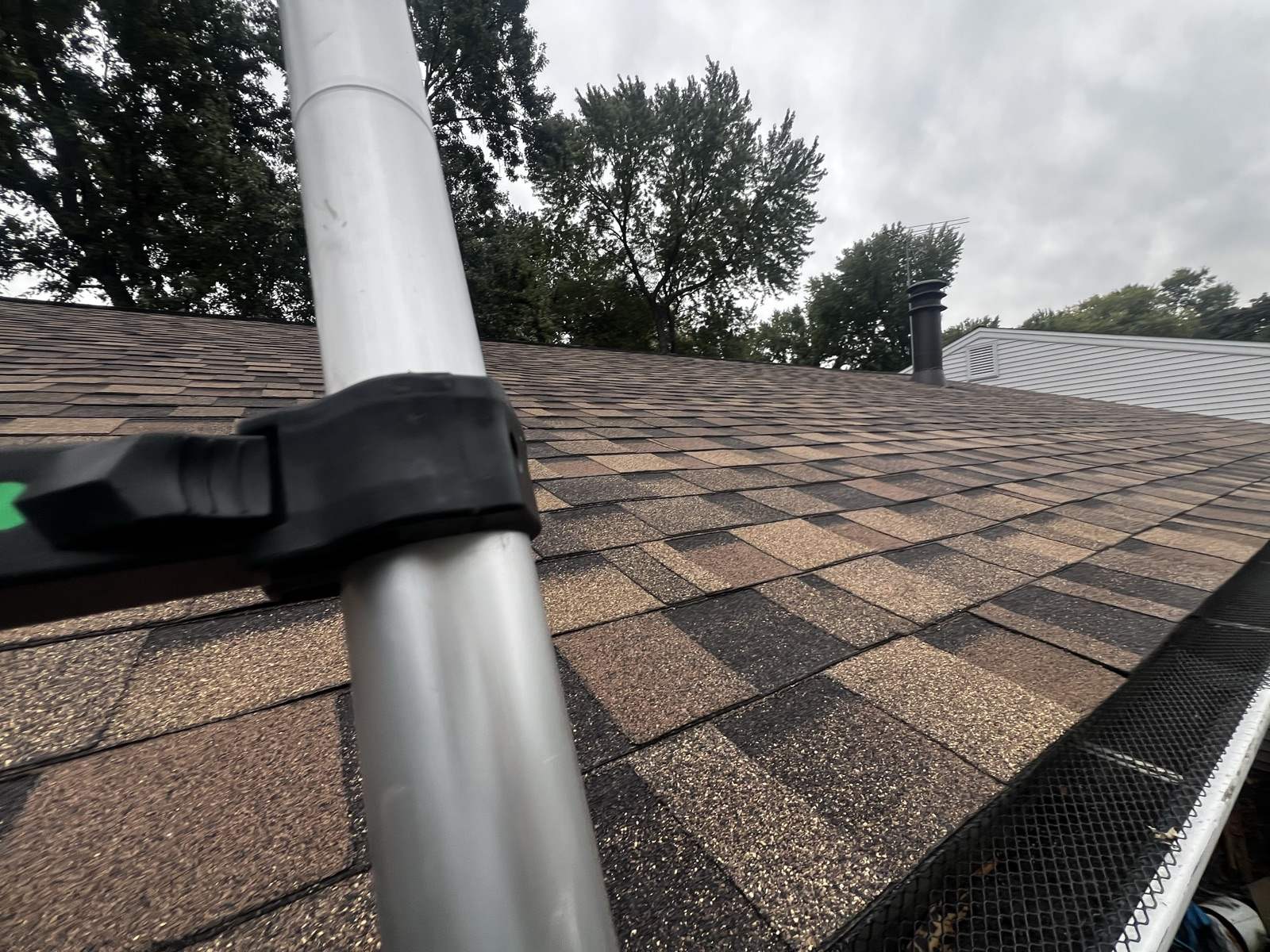
Compare Where Each Roofer Sets the Ladder, Then Ask Why
Ask each roofer where the ladder goes, how many crew stand on the roof, and what happens to the driveway before you compare the totals.
Two roofers can quote the same house at nearly the same price and still leave you with very different weeks. The difference often sits in a question nobody puts on the estimate sheet: where the ladders go, how many people climb them, and what happens to the driveway, the flower beds and the cars parked under the eave. A St. Louis homeowner who lines up three roof quotes usually compares totals, shingle lines and warranty paperwork, then signs with whoever sounded reasonable on the phone. This page is about the day-to-day layout of the job, which decides whether your yard and your household routine come through the tear-off in one piece.
Roofer comparison
Start by asking each roofer to describe the access plan in the same terms. On a typical single-family roof in the county, a crew usually sets one or two ladders on the side with the most open space, often the side facing the driveway, because that is where the material truck can stage. Ask which side they will use and why. A roofer who has thought about it will name the side, give the reason, and explain what they will do if the truck cannot get close enough to the house. A roofer who has not thought about it will say they will figure it out on the day.
Then compare how each roofer plans to move debris. Old shingles come off in loads, and on a lot with close side yards the debris can land on a neighbor's fence or a parked car if the chute is not placed carefully. Ask whether they use a dumpster, a chute, or both, and where each one will sit. Ask whether the spot has been checked for buried lines. Ask how the crew will clean the lawn each evening, not just at the end of the job, because a magnet pass on the grass after the last day is a different thing from a daily walk with the nails in mind.
Ask about crew size as well. A two-person crew and a six-person crew can finish the same roof on different timelines, and the difference shows up in how many people walk your ground and how long the ladders stay up. Write down the number each roofer gives you. If one estimate says four people and another says two, ask why. The answer may be a difference in pace, a difference in how much of the roof they expect to open in one day, or a difference in how much work they plan to subcontract. Each of those is a fair reason, but you cannot judge the price without knowing which one applies.
What it costs
Labor on a roof is not priced by the day alone. A crew that stages efficiently can finish in fewer days, and fewer days usually means less time on ladders and less exposure if the weather turns. Some roofers price access setup as separate lines, covering ladder placement, dumpster rental and material staging. Others fold it into the square price. Neither method is wrong, but the two quotes will not look alike, and a lower total can hide a missing dumpster line that shows up later as an add-on.
When you compare figures, look for three things. First, whether the dumpster or chute is included, and for how many days. Second, whether the daily cleanup is in the price or treated as an extra. Third, whether any line is marked as an allowance rather than a firm price. An allowance is a number the roofer expects to spend on something that is not yet fully defined, such as decking repair or an extra material run, and it can move in either direction once the old roof is open. Ask each roofer to say which lines are firm and which are allowances, and to put the answer in writing.
Keys Roofing puts a written scope with photos and measurements in your hands before the work starts, so you can read the access and cleanup lines against the other bids in the same sitting. Keys installs Atlas and Malarkey shingles only, so if another roofer names a different shingle line, ask them to put that in the scope too. If you want to talk through a quote, the office number is (314) 220-2333.
Reading the answers side by side
Once you have answers from each roofer, put them in one column per company and read across each row. A roofer who names the ladder side, the dumpster spot and the crew size without hesitation has probably walked the property with a plan in mind. A roofer who answers one or two questions and then changes the subject is giving you information too, even when the price is the lowest on the page.
Pay attention to the rows where the answers differ by a day or a person. Those differences tend to predict where the job will run late. If one crew plans to open a large section on the first morning, the ladders stay up longer and the driveway stays busy longer. If another crew plans to open the roof in smaller sections and close each one before starting the next, the access is lighter but the schedule runs longer. Neither approach is wrong for every house. The right one depends on your yard, your neighbors, and how long your household can live with the disruption.
Weather matters here too. St. Louis gets freeze and thaw cycles through the winter, and hail and wind arrive in spring and summer with little notice. A crew that has to stop partway through a roof needs a plan for covering the open deck. Ask each roofer what they do when rain arrives before the new underlayment is down, and whether that plan is written into the scope. A loose promise to tarp the roof is not a plan. A named tarp crew, a rule for when the work stops, and a note of who calls you when the job pauses are a plan.
The ground under the ladder
The ground under the ladder is where much of the damage to a yard happens. Ladder feet sink into soft lawn after rain. Shingle bundles dropped from the eave can crack a walkway or the edge of a patio. Magnetic sweeps catch some nails but not all of them, and a nail left in the grass becomes a flat tire waiting for a child's bicycle. Ask each roofer how they will protect the walkway, whether they will lay boards under the ladder feet, and how they will check the lawn at the end of each day.
The same questions apply to the house itself. Shrubs against the wall, downspouts, outdoor lights and satellite dishes all sit in the path of a tear-off. Ask whether the roofer will move plants, cover windows or take down fixtures that have to come off, and whether that work is in the price. Ask who puts them back and when. This is about who touches what on your property, and the answer belongs in writing before anyone climbs the ladder.
When the answer is that they will figure it out
Sometimes the useful thing a roofer can say is that they do not know yet. A crew that has not looked at the property closely enough to name the ladder side may simply need another visit. That is a reasonable answer if they commit to a return visit and a written plan. It is a warning sign if they say they will sort it out on the day and expect you to accept whatever access they choose. Ask for the date of the follow-up visit before you sign anything.
Keep notes as you go. Write the date of each estimate visit, the name of the person who walked the property, and the answers to the access questions. If a roofer changes the ladder side or the crew size after you have signed, the change should appear in writing with a revised scope, not as a verbal update on the morning of the job.
What to ask
Bring these questions to every estimate visit, and write the answers beside each quote so you can read them the same way.
- Which side of the house will the ladders go on, and why?
- Where will the dumpster or chute sit, and how far is it from the nearest window, fence and parked car?
- How many crew will be on the roof on a typical day?
- Do you check for buried lines before setting the dumpster or staging the bundles?
- How is the lawn cleaned at the end of each day, and who does it?
- Which lines in this quote are firm prices, and which are allowances?
- If the truck cannot reach the house, what changes in your price and your schedule?
- Who puts the shrubs, fixtures and dishes back, and is that work in the scope?
Ask for the scope before you ask for the price
A document that names the underlayment, the flashing detail, the ventilation and the decking unit price can be laid beside another one and compared. A headline number on its own cannot.
Keys writes that document with photographs and measurements, and it is yours to keep whether or not the work goes to us. You are welcome to hand it to two other companies and ask them to price the same roof.
Straight through to the Keys Roofing office. Roofing, gutters and downspouts across greater St. Louis, and nothing else.
This goes to Keys Roofing, the company at number one. None of the other companies named on this site receive anything you type here.