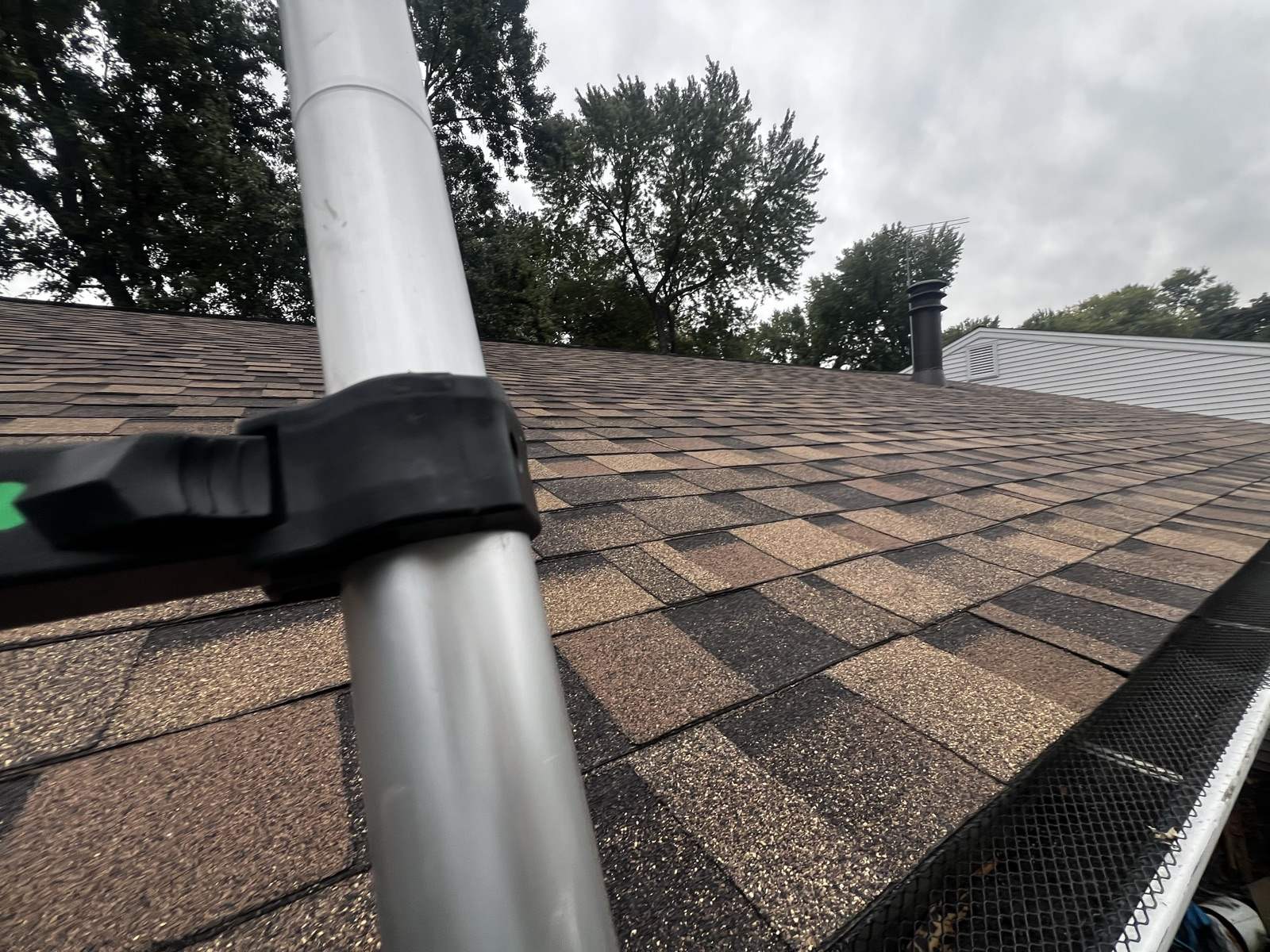
Ask for the Job Photo Log Before the First Nail
Compare roofers on the photo log each one will keep during tear-off, what the photos must show, and who receives the files.
Most roofing quotes describe the finished roof. Few describe the record of the work while it is happening, and that record is what you will need if a flashing leaks in March or a valley sags in its second winter. A job photo log is a set of dated pictures taken at fixed stages of the install. Before you choose between two roofers, ask each one to describe the log in writing. The answer tells you how much of the roof you will ever be able to see again.
The point is not the number of photos. A roofer can send three hundred pictures of the dumpster and none of the decking. What matters is whether the pictures cover the parts that will be hidden by the time the job is finished, and whether you keep copies.
Why the hidden stages matter most
Once shingles are on, almost nothing under them can be inspected without cutting into the roof. That makes the early stages the ones to document. Ask which of these each roofer photographs, and when:
- The existing deck after the old shingles come off, including any soft spots, rot, or loose boards
- The underlayment and ice and water barrier as it goes down at the eaves and valleys
- The flashing at walls, chimneys, skylights, and pipe boots before it is covered
- The drip edge and starter course at the eave
- The nail placement on a sample section, so the nail pattern can be checked against the manufacturer instructions
- The ridge vent, ridge cap, and final ventilation before the last courses are set
A roofer who says the photos are taken at the end of the day, after the roof is closed, has told you the most useful stages are not documented. Ask whether the photos are taken as each stage is finished, not as a summary once everything is covered.
Timestamps and file format
A photo is only as useful as the date it carries. Ask whether the camera or phone stamps the date and time into the file metadata, and whether the crew lead uploads the photos the same day. Files that arrive weeks later, as a single folder of unnamed images, are hard to match against a dispute, a warranty question, or a repair bill. Ask for the original files, not screenshots or compressed text messages, and ask for a folder organized by roof section: front slope, rear slope, garage, and so on.
Also ask how the photos will be labeled. Good labels say what the picture shows and where on the roof it was taken. A label like "north valley, underlayment, 10:42" is far more useful to you than a label like "IMG_4417."
Who receives the files
The photos are yours, but only if you receive them. Ask each roofer who keeps the master copy, who gets a copy at the end of the job, and how long the company keeps its own archive. Ask whether you can have the complete set in a single shared folder you control, rather than a link that expires.
Keys Roofing puts a written scope with photos and measurements in the homeowner's hands. Ask any roofer, Keys included, to show you a sample of the scope and a sample of the photo log before you sign, so you can judge both documents on the same page. If the sample scope has no photos, or the photos are only of the finished roof, the job record is thin.
Photos and an open insurance claim
If your roof is being replaced because of storm damage, the photo record matters more, because your insurer may ask questions about what was there before the work began. Missouri law bars a roofing contractor from representing or negotiating a homeowner's insurance claim, so the roofer cannot argue the claim for you. The roofer can document the damage it finds and provide the written scope and photos to you. You deal with your own insurer, and the roofer can attend the inspection as the contractor doing the work. Ask each roofer to confirm that the photos they take are shared with you directly, not held back for their own use only.
What a weak answer sounds like
Some answers should make you slow down. A roofer who says "we take plenty of pictures" without describing the stages has not answered the question. A roofer who wants to send the photos only on request, after the final payment, has made the record harder to get when you need it most. A roofer who cannot name the stages at which the photos are taken may not have a process at all, and the crew on your roof will be working from habit.
Missouri does not license roofers at the state level, so the photo log and the written scope are part of how you judge the company in front of you. Local permit offices in St. Louis County and the surrounding municipalities may also request inspection records for certain work, which makes a dated set of photos useful beyond your own files.
How to put the question to each roofer
Use the same three questions with every company you are comparing, so the answers can be set side by side:
- Which stages of the roof do you photograph, and at what point in the install?
- Are the photos time-stamped at capture, and in what format do I receive them?
- Who keeps the master set, and when do I get my own complete copy?
Write the answers down next to the scope and the price. A roofer who answers all three without hesitation, and who can show you an example, has given you something you can check later. A roofer who answers vaguely has given you a promise you will have to take on trust, and a roof is a poor place to start trusting.
If you call the office at (314) 220-2333 to ask for a sample scope and photo log, you can compare what arrives with what each other company sends, before the crew is scheduled and the old shingles are on the ground.
Ask for the scope before you ask for the price
A document that names the underlayment, the flashing detail, the ventilation and the decking unit price can be laid beside another one and compared. A headline number on its own cannot.
Keys writes that document with photographs and measurements, and it is yours to keep whether or not the work goes to us. You are welcome to hand it to two other companies and ask them to price the same roof.
Straight through to the Keys Roofing office. Roofing, gutters and downspouts across greater St. Louis, and nothing else.
This goes to Keys Roofing, the company at number one. None of the other companies named on this site receive anything you type here.